


Siding For Houses: How To Choose What’s Best For Your Home
The best siding for houses is subjective. When changing your house siding or installing new siding, the goal is to improve your home’s curb appeal. With all of the many types of siding and color
Best Of
Is the Kitchen Pot Filler Useful? 17 Design Ideas That Show Its Real Value
A kitchen pot filler is a practical feature that brings water directly to the cooktop, reducing the need to carry heavy pots across the room and streamlining everyday prep. It doubles as a design elem
Kitchen
With 125 Volunteers, Choi + Shine Crochet the 12 Animals of the Chinese Zodiac
Suspended above reflective surface mimicking a dark body of water, “Distance” comprises large-scale crocheted sculptures.
Do stories and artists like this matter to you? Become a Colossal Member today


Siding For Houses: How To Choose What’s Best For Your Home
The best siding for houses is subjective. When changing your house siding or installing new siding, the goal is to improve your home’s curb appeal. With all of the many types of siding and color
Best OfThe best siding for houses is subjective. When changing your house siding or installing new siding, the goal is to improve your home’s curb appeal.

With all of the many types of siding and colors and textures available, a siding project can be daunting. Before you can make an informed decision, you need to have the right information.
Types Of Siding
There is a wide array of siding on the market today. The good news is that with most house siding, the only maintenance required later is keeping it clean. Steel siding, metal siding, and fiber cement siding offer unique challenges, for example. In recent years, new siding has emerged that is highly durable and offers longer lifespans.

One type of metal siding, for example, isn’t better than others because it depends on your needs. For those living in cold climates, the best siding will not be the same for those living in warmer climates.
Although there isn’t such a thing as the best siding, there are siding options that are best for your home. Let’s go over the different types of siding and the different types within each category. We’ll include the price, why people choose them, and how they’re cost effective.
Natural Wood Siding

If you want a real wood look there are many types of wood siding to choose from, including board and batten and log. The question is, what type of wood is best or long lasting? This is similar to picking a type of hardwood floor.
Engineered wood siding is popular because it can last 50 years or longer. Older homes do not have siding, so if your home was built before 1960, it’s time to explore other siding options.
Cedar Shakes
Cost: $6 – $12 per square foot
Most types of wood shingles, like cedar shingles, are popular wood siding. Cedar shake shingles is a cost effective and environmentally friendly option that’s also long lasting compared to other siding options. It is a sustainable, durable softwood and offers a great sound barrier and insulation. Among all siding materials, it’s also known for its energy efficiency qualities.
But one of the most unique things about cedar shakes is the smell that it brings to your home. It’s also not a high maintenance option and can withstand most weather conditions.
Redwood Shingles
Cost:$8-$20 per square foot
Redwood siding’s name doesn’t betray its look. It does have red tones and makes your house look like a cozy lodge. But it’s not just the color that makes people choose it. It is also a durable hardwood that is weather and insect-resistant, and also low maintenance.
Pine Wood Siding
Cost: $1-$5 per square foot
Pine wood siding is one of the cheapest types of wood siding. You can get it for a dollar or less per square foot. If you install it yourself, you can enjoy the low cost even more. Made with recyclable materials, pine wood siding is durable and weather resistant, plus it offers great curb appeal to other types of siding.
Engineered Wood Siding

Engineered wood siding is the best exterior siding for a house when you want something natural and rustic. Wood shingles can only go so far, but with engineered wood siding, you can add great curb appeal to your home.
Wood siding isn’t for everyone, but it is a unique option that most people end up falling in love with soon after they install it. Engineered wood is a nice alternative to brick veneer or natural stone.
Stone Veneer Siding
Stone veneer siding is a natural siding that can look both rustic and modern. It depends on the tones of the wood and how it is cut. You can get veneer siding in natural and or uncut shapes that will make siding installation easier. The siding is durable and many homeowners like its fade resistant qualities.
Natural Stone Veneer
Cost: $28-$50 per square foot
Natural stone veneer house siding is one of the most expensive siding options out there. This type of siding uses real rocks and stones that are usually uncut or cut to look natural. The plus side is that you can use it as your wall or even fireplace.
Although the price points might be high, many homeowners like it because it’s highly durable and adds to their home’s curb appeal.
Stone Cladding
Cost: Varies
Stone cladding is a good way to find cheaper stone siding. It is still real stone, but it’s cut so that it is thin enough to go on top of existing siding or a base like plywood. It works in panels on most occasions or like vinyl siding.
Natural Stone Block Siding
Cost: $10-$15 per square foot
Stone blocks are an alternative to uncut stones. Natural stone block is used to build walls and structures and are typically standalone whereas natural stones are usually used on top of other materials. Natural stone blocks are cheaper than natural stones.
When Is Natural Stone Ideal House?
Natural stone is one of the more expensive options so unless you want something rather high-end, then stone isn’t ideal. If you want something that will impress, however, then you can’t go wrong with stone.
Cement Siding
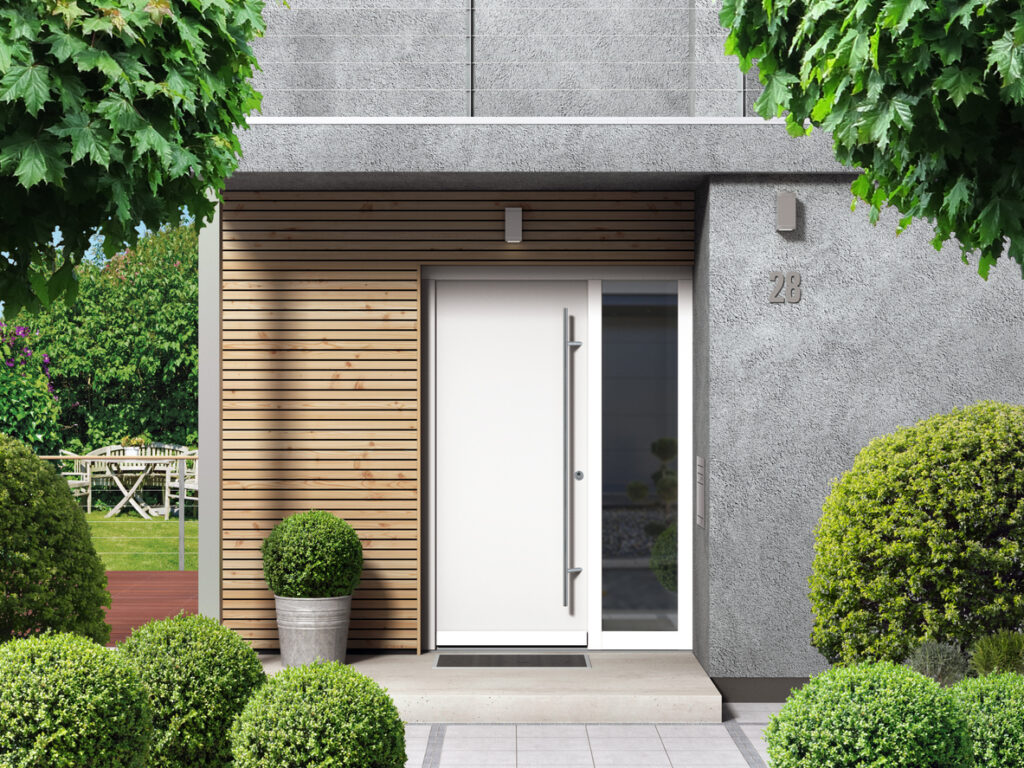
Cement siding is popular siding choice. Although you won’t get pure cement siding as cement is an ingredient, not a solid material, using cement in your siding can strengthen it. Learn the difference between cement and concrete.
Concrete
Cost: $10 to $60 per square foot
Concrete isn’t a siding as it can break if poured too thin and used as tile. However, concrete walls are popular. There’s not much that can affect concrete, so it’s a solid option for a home’s exterior walls. Where energy efficiency is concerned, concrete is a great choice and provides great value for your home.
Fiber Cement Siding
Cost: $1 to $20 per sq ft
Fiber cement is a very popular option for those who like the look of it. The price is largely depending on if you get shingles, boards, “stones” or something else. Labor costs more than the material, so it’s a good one to install yourself.
Faux Stone Veneer
Cost: $10 to $15 per square foot
Faux stone veneer isn’t made of cement, despite looking like stone. It’s an amazing option if you want stone but can’t afford it. While it isn’t cheap, it’s a lot cheaper than getting real stone and most people won’t know the difference.
Stucco
Cost: $2 to 49 per square foot
If you want something that looks vintage and high-end, stucco is perfect. While acrylic stucco is “nicer” than cement stucco, it’s also five times more expensive. So most people go with cement for general houses. This is good for horizontal lap siding and also a popular replacement siding.
When Is Cement The Best For A House?
Cement is ideal for a house whenever you want something extremely durable and affordable. Made with Portland cement, it’s durable and the cheapest option that will also last a lifetime.
Metal Siding

Metal siding isn’t all that common in structures that are lived in, it is a common siding for barns, metal roofs, and outdoor buildings. Only recently it’s been used in houses too due to the many pros that the siding types offer.
Copper Siding
Cost: $7 to $9 per square foot
Copper is a very distinguishable metal with a very warm hue. It rarely ever needs to be replaced as it is durable and doesn’t corrode. The only thing that does happen to copper is that it fades over time.
Steel Siding
Cost: $4 to $5 per square foot
Steel is a material made up of other metals. It’s one of the cheapest metal sidings you can have. There are cheaper options but they are reserved for outbuildings rather than residential homes which need to be safe.
Aluminum Siding
Cost: $3 to $4.50 per square foot
Aluminum siding is only slightly cheaper than steel. It is easier to install as it is flexible and can be placed on curves. It is also lightweight compared to steel which is heavy. Both options are good and come down to preference and availability.
When Is Metal The Best For A House?
Metal siding is ideal for a house whenever you want something modern. It can be rustic only when you make it look barn-like.
Brick Siding

Brick houses are very common as brick has been used for decades and is often considered one of the strongest building materials. It doesn’t offer a lot of versatility but it makes up for that in strength and character.
Solid Brick Siding
Cost:$14 to $28 per square foot
Solid brick siding is brick facing that is 4in thick. It uses real bricks that aren’t cut smaller to cover and insulate your home. They range in price but are one of the more expensive ways to add siding to a house.
Thin Brick Siding
Cost: $10 to $20 per square foot
Thin brick, or brick veneer, can be made out of real brick. It uses a lot fewer materials than solid brick and is cheaper in general. It’s a great option for saving money but isn’t quite as strong or durable as solid brick.
When Is Brick Siding Ideal?
Brick is ideal when you want something that looks modern, yet still homey. It is a common option also for those who live in stormy regions as brick is extremely durable compared to other siding types.
Vinyl Siding

Vinyl siding is popular and the cheapest siding on the market today. It can look any way that you want it to look but you’ll pay a lot less than you’d pay for the real material that it is replicating.
Clapboard Siding
Cost: Less than $2 per square foot
This is one of the cheapest ways to add siding to a house. The cost of house siding can be expensive but a classic clapboard or lap siding of any kind will save you a ton of money. If you’re not picky, this is the best option.
Log Siding
Cost: Varies
The cost of vinyl siding that looks like wood or log varies greatly. You can get lucky and pay the same as you’d pay for clapboard or not be able to find any for less than you’d pay for real wood. So this is a gamble.
Board And Batten
Cost: Less than $2 per square foot
Board and batten is sold for the same about as regular vinyl. The siding comes in panels and is easy to install. It isn’t high maintenance and offers something different than other types of siding.
Shake Siding
Cost: $3 to $7 per square foot
Shake siding is similar to vinyl shingles. It cost a little more but can be quite a bit cheaper if you install it yourself. It takes time to install shake whereas other vinyl sidings can go up in mere hours, or even minutes.
When Is Vinyl Siding Ideal?
Vinyl siding is a good option if you want something versatile yet cheap. If you want something very specific yet cain’t afford it, then you should probably get vinyl as it will get the look you want a fraction of the price.
House Siding Colors And Textures
House siding comes in a variety of colors. The most important thing is to choose the color that you want and one that offers the most curb appeal.
Deep Red

Deep red, like brick red, is an excellent choice. Be careful not to get a barn red unless you want that country look. Otherwise, you can’t go wrong with staying on the darker end of things. Darker shades like burgundy and maroon are great choices.
Beige
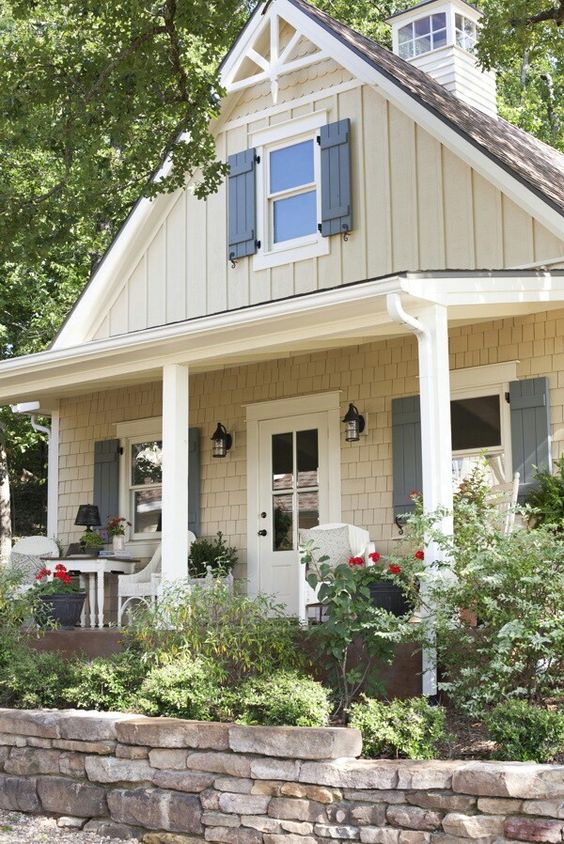
Beige offers a natural appearance and is popular with board and batten siding. It’s a safe choice and a great option for buyers if you’re selling your house. No one will say “no” to beige, but a different, brighter color may be off-putting.
White

White white be the most popular color for vinyl siding. You can use any shade of white without regret. Choose creamy vanilla for a soft look or a crisp white for something clean and sophisticated. You want to achieve the same aesthetic that’s common in your neighborhood, and white is usually the best choice.
Soft Yellow

If you want to add color, yellow is a good option for board and batten siding or even lap siding. The color gives a house that special cottage feel. Try to stray from the dark or bright yellow and go with softer yellow. Yellow is a common house color that isn’t dull or overwhelming.
Sage Green

Any mute green will work. Green is also a popular vinyl siding color. Metal siding can also be green, just make sure you use the right shade. A medium, more neutral green is the safest choice. Sage is one of the best choices as it never goes out of style. Darker shades are available, but before making a decision, check your HOA guidelines as some shades may not be prohibited.
Barely Blue

Almost any blue can work for an exterior of a house, but one of the best blue house siding options is barely-there blue. This blue is so light that it almost looks white. If you want the smallest touch of color, this is your best bet.
Gray

Gray is always a great choice for neutral environments. It is often the safest option for a house color. White beige and white are great, while gray offers something in-between the two. It is a cool color but also makes one think of stone, which adds value to a house.
Ocean Blue

You can use teal, aquamarine, or another ocean blue green to create an automatic beach house. Beach houses are doing very well right now so any beach house color will do well in personal homes and those on the market.

Most colors can work on house exteriors. While colors like purple are risky, you can get by with using peach quite freely. Not all pink tones work, but peach is a safe color to use if you want a pink house.
Frequently Asked Questions (FAQ)FAQ
Which Type Of Siding Requires No Maintenance?
Vinyl siding is billed as low-maintenance siding materials that will free you from having to scrape, paint, and otherwise care for your home’s exterior. It’s been around since the 1950s, and was first introduced as an alternative to wood.
What Is The Difference Between Hard Plank And Hardie Board?
Fiber cement siding is often called “hardiplank” or even hardie board named from the most popular brand of fiber cement siding which is manufactured by James Hardie. Fiber cement planks are formed by combining wood pulp with Portland cement. If you want a natural wood look you might like hard plank. Hardie board, on the other hand, is a popular siding choice.
Which Type Of Aluminum Siding Is The Cheapest?
Vinyl siding is one of the best options when it comes to cheap siding, both with material and installation costs. Vinyl siding can be installed quickly and can even be installed directly over existing material. It’s not high maintenance and is a great choice when you’re on a limited budget.
What Is Clapboard Siding?
Clapboard siding is a siding made of wood that is installed horizontally in an overlapping pattern from the bottom of the wall moving upward. Batten siding styles are popular among homeowners.
Which Type Of Siding Is The Most Energy Efficient?
Wood siding is a good insulator, but it seems that vinyl siding is better. The thing is, you should expect wood, as a natural material, to change while temperatures change, so it is impossible having it entirely tight-sealed.
Types Of Siding Conclusion
Now that you know about the different types of siding available on the market, you can make an informed decision. You may decide you want real wood siding or a stone veneer, regardless you’ll know what to expect before you install it.
Most siding options last 50 years. Each siding comes with a warranty, but make sure you double check before you make a purchase. If you decide on a wood species, make sure it’s made with fire resistant material and can protect your home from moisture damage. Depending on where you live, different siding may be problematic and you’ll have to choose other siding styles.
Siding is available in a variety of colors, and all of them are weather resistant. The best types of siding are the ones that last a very long time and are made with durable material. In the long run, siding will protect your home better than anything else. When applied directly, you’ll find that siding will preserve your home.
Before you get started, you don’t want to buy siding more than once when you own a home. Siding is an eco friendly solution that sometimes requires regular maintenance, but in the long, is worth it. Any type of siding you choose will offer a unique look, so take your time and choose what’s best for your home.
The post Siding For Houses: How To Choose What’s Best For Your Home appeared first on Homedit.

Is the Kitchen Pot Filler Useful? 17 Design Ideas That Show Its Real Value
A kitchen pot filler is a practical feature that brings water directly to the cooktop, reducing the need to carry heavy pots across the room and streamlining everyday prep. It doubles as a design elem
KitchenA kitchen pot filler is a practical feature that brings water directly to the cooktop, reducing the need to carry heavy pots across the room and streamlining everyday prep.

It doubles as a design element that can elevate a backsplash, complement your hardware, or highlight the range wall.
These kitchens show how a pot filler can be both useful and visually, working as a functional detail that supports the flow of a well-planned space.
1. Chevron Tile & Matte Nickel Pot Filler

The white chevron backsplash sets a clean foundation for the matte nickel pot filler, placed precisely over the gas range for streamlined cooking. The two-tone vent hood adds depth, and the darker lower cabinets anchor the layout with structure.
The pot filler stands out here as the one feature that turns this simple wall into a functional workstation.
2. Deep Blue Cabinetry With Brass Pot Filler

Rich blue cabinetry frames a herringbone stone backsplash, giving the brass pot filler a strong architectural presence. The classic cooker and built-in corbels create a traditional setup with modern usability.
This pot filler feels almost like hardware on a crafted piece of furniture — intentional and well-placed.
3. Patterned Tile With Vintage-Style Brass Pot Filler

The hand-painted tile backdrop enhances the vintage-style brass pot filler, making it a focal point that pairs well with the stainless range. Blue cabinetry ties everything together with a refined contrast.
There’s a timeless rhythm between the tile grid and the pot filler silhouette that elevates the entire wall.
4. Marble Slab Backsplash With Sleek Brass Pot Filler

A polished slab backsplash allows the brass pot filler to float visually above the cooktop. It blends utility with elegance, giving the kitchen a refined but highly practical prep zone.
The clean extension of the arm against the stone makes the wall read like a single sculpted surface.
5. Soft Cream Cabinetry & Minimalist Brass Pot Filler

The brass pot filler sits against a warm stone backsplash, aligned perfectly with the range for real workflow efficiency. Slim handles and the curved vent hood add to the kitchen’s tailored look.
This pot filler works almost like a hinge between the traditional cabinetry and the modern appliance.
6. Decorative Backsplash Inset With Black Pot Filler

The patterned tile inset frames a matte black pot filler, turning it into a graphic element in the center of the kitchen. The contrast against the stainless stove highlights both color and form.
The pot filler becomes the anchor point that pulls the entire backsplash design together.
7. Herringbone Backsplash With Chrome Pot Filler

The chrome pot filler matches the range hardware, creating a cohesive metal finish story. The herringbone tile adds quiet movement behind the setup, keeping the wall simple but not flat.
The placement makes the pot filler feel like a natural extension of the range itself.
8. Veined Marble With Polished Nickel Pot Filler

A polished nickel pot filler blends into the dramatic veining of the marble slab, offering usability without interrupting the stone’s pattern. Paired with the stainless range, it completes a chef-style arrangement.
Here, the pot filler almost disappears until it’s needed — a subtle luxury.
9. Matte Brass Pot Filler on Square Tile

Square handmade tiles create soft texture behind the matte brass pot filler, giving it a clean, structured backdrop. The all-white cabinetry keeps attention on the subtle details.
The pot filler introduces just enough contrast to break the monotone in the best way.
10. Marble Statement Wall With Brass Pot Filler

The bold marble pattern sets a dramatic stage for the brass pot filler, which adds a precise geometric accent to the fluid stone lines. The contemporary range balances the entire composition.
The pot filler brings order to the organic veining — a perfect design counterpoint.
11. Black Range With Stainless Pot Filler

The matte black range sits under a custom hood with cross-panel detailing, giving the stainless pot filler a clean, functional spot on the brick backsplash. The contrast between the dark appliance and white cabinetry sharpens the entire layout.
The pot filler works like a structural hinge between the classic range and the crisp wall tile.
12. Classic Cottage Kitchen With Brass Pot Filler

Soft cream cabinetry and a dark stone backsplash frame the brass pot filler, positioned precisely above the range for daily prep tasks. The checkerboard floor and wood island complete the room’s traditional rhythm.
This pot filler brings a polished note that balances the rustic table and vintage lighting.
13. Vertical Paneling With Brass Pot Filler

Vertical tongue-and-groove paneling forms a quiet backdrop for the brass pot filler, aligning perfectly with the white hood’s clean geometry. The brass hardware on the range reinforces the material continuity.
The pot filler feels almost architectural here, following the same vertical lines as the paneling.
14. Copper Accents and Aged Brass Pot Filler

A wall hung with copper cookware sets the tone for the aged brass pot filler beneath it. The long spout reaches cleanly across the range, matching both the cookware and the brass rail above.
The pot filler becomes part of a curated display rather than a standalone fixture.
15. Built-In Coffee Bar With Pot Filler

This concealed coffee station features a compact pot filler integrated into the wood cabinet niche, giving the counter a dedicated water source for brewing. The brass hardware ties it to the rest of the kitchen design.
The pot filler turns the cabinet interior into a fully functional prep area instead of simple storage.
16. Full-Slab Marble With Brass Pot Filler

The dramatic marble slab sets a fluid backdrop for the brass pot filler, which stands out with clean lines above the induction range. Matching brass handles on the oven reinforce the unified look.
The pot filler is the one detail that breaks the veining just enough to introduce structure.
17. Elongated Tile With Brass Pot Filler

Elongated white tiles create subtle texture behind the brass pot filler, centered over the gas cooktop for precise usability. The natural walnut hood adds depth and anchors the wall visually.
This pot filler gains presence by sitting against a tile pattern that leads the eye horizontally.
The post Is the Kitchen Pot Filler Useful? 17 Design Ideas That Show Its Real Value appeared first on Homedit.
With 125 Volunteers, Choi + Shine Crochet the 12 Animals of the Chinese Zodiac
Suspended above reflective surface mimicking a dark body of water, “Distance” comprises large-scale crocheted sculptures.
Do stories and artists like this matter to you? Become a Colossal Member today

Located in the Yangtze River Delta, Hangzhou is enmeshed in waterways. The city’s center abuts a large lake and sits just north of the Qiantang River, infamous for its magnificent tidal bore that sweeps through the region each fall.
For their latest project presented in the Hangzhou Triennial of Fiber Art at Zhejiang Art Museum, Jin Choi and Thomas Shine merged aspects of this local environment and culture with their distinctive process. The artists, who work as Choi + Shine Architects, often create sweeping lace isntallations crocheted in partnership with local communities. Choi typically designs the motif, while Shine focuses on the structure itself.

Suspended above reflective surface mimicking a dark body of water, “Distance” comprises crocheted sculptures representing all 12 animals of the Chinese Zodiac. “As society evolves, [the zodiac] continues to find relevance, connecting to the wisdom of the past and the shared narratives that shape our identities today,” the artists write. “Its legacy, with its rich symbolism, cultural significance and unifying power, will endure as a navigational tool in the current and future social shifts.”
Rather than depict a dog or rabbit in its entirety, Choi isolated elements of each animal—find preliminary sketches and reference imagery on the artists’ website. The ox, for example, is represented through a slender tube evocative of a horn, while the rooster can be spotted through a fan-like plume.
The installation’s structure is circular and appears to shift depending on the viewer’s perpseicve. “The composition loses its legible visual order and the elements start to form different relations, allowing for varying compositions,” the artists say. This emphasizes “one’s power to position oneself in reference to others, to actively define different connections and relationships.”
As for the making-of, Choi + Shine know that community members come to their collaborative process with varying levels of craft experience. Their projects often become educational sessions in addition to community gatherings, as participants demonstrate a particular stitch or help troubleshoot issues.

“Many volunteers are actually novices in crochet, and there are many complex patterns. They may not be very good at crochet, so we are in the process of communicating and collaborating. Beginners and skilled volunteers help each other,” said Wu Qin, who led volunteer efforts for this isntallation.
“Distance” is now permanently isntalled at the Zhejiang Intangible Cultural Heritage Museum. Follow more of the Choi + Shine’s work on Instagram.


Do stories and artists like this matter to you? Become a Colossal Member today and support independent arts publishing for as little as $7 per month. The article With 125 Volunteers, Choi + Shine Crochet the 12 Animals of the Chinese Zodiac appeared first on Colossal.
15 Types Of Desks
From classic wooden desks that bring timeless elegance to sleek, minimalist designs that boost efficiency, the right type of desk supports both productivity and personal style. Whether it’s a space-
Office DesignFrom classic wooden desks that bring timeless elegance to sleek, minimalist designs that boost efficiency, the right type of desk supports both productivity and personal style. Whether it’s a space-saving floating desk, a functional standing desk, or a bold executive desk, there’s a type to fit every need and workspace.

- Executive
- Standing
- Writing
- Secretary
- Vanity
- L-Shaped
- Wall
- Bookshelf
- Cabinet
- Corner
- Gaming
- Hutch
- Loft-Bed
- Drawing
- Floating
Executive Desk

An executive desk is a symbol of sophistication and functionality, specifically designed to meet the working and symbolic needs of a high-ranking professional. Executive desks are desks that are typically larger than standard desks. They often feature an expansive worktop, ample storage, and a decorative design. Crafted from high quality materials like wood and exotic veneers, these desks showcase a myriad of elegant finishes and designs.
Standing Desk

A standing desk, also known as a stand-up or adjustable-height desk, is a versatile and ergonomic desk option. Standing desks allow users to switch between sitting and standing positions by adjusting the desk height mechanically or manually.
The growing popularity of standing desks reflects a growing awareness of the negative effects of prolonged sitting on health. Standing desks promote better posture and less sedentary behavior while also alleviating back pain and stiffness. Most standing desks are simple or modern in design and made of a variety of materials, including metal, wood, and synthetic materials.
Standing desks also promote greater productivity and focus, as well as preventing the afternoon slump that we associate with sedentary work.
Writing Desk

A writing desk is a compact and classic desk type that is best suited as a surface for writing and studying. A writing desk is distinguished by its simplicity of design, with a flat and uncluttered desk top and a few lower drawers or shelves for storage. Unlike larger desk types, a writing desk is small and can occupy less space. As a result, they are appropriate for a variety of non-office spaces, such as bedrooms, living rooms, and dining rooms.
Consider a writing desk if you want to add a desk to a room with other furniture. These desks offer the ideal space if you write or do other focused work and do not need extra storage. These desks come in a variety of styles and use diverse materials, so you can find a writing desk to complement your other furniture and room style.
Secretary Desk

A secretary desk, also known as a drop-front desk or escritiore, is a distinctive desk type that combines a compact design with closed storage. A secretary desk is characterized by a hinged door that serves as a writing surface when it is open and conceals the work area when it is closed. When closed, these desks resemble a cabinet or console, making them an unobtrusive piece of furniture that can be used in non-office areas of the home.
Vanity Desk

A vanity desk, also called a dressing table, is a type of desk designed for personal grooming and storage. Vanity desks are typically equipped with a mirror and a tabletop for setting grooming tools while in use. These desks also feature under-the-table storage like drawers, shelves, or compartments for brushes, cosmetics, and other grooming essentials.
L-Shaped Desk

An L-shaped desk is a space-saving desk with a layout that resembles the letter “L.” This desk forms an “L” shape by connecting two rectangular desk tops perpendicularly. This design provides users with plenty of work and storage space. There is typically a longer and a shorter section. The long side serves as the primary work area, while the short side serves as an additional work area.
Choose an L-shaped desk if you need to designate different work areas or want to create a space-efficient office. These desks are ideal if you want to put a desk in a corner to save space. This desk is also useful if you require a temporary work station for another person to collaborate on projects.
Wall Desk

A wall desk, also known as a floating or wall-mounted desk, is a type of modern desk that fits directly against a wall or another flat, vertical surface. This type of desk uses the wall as partial support, reducing the number of legs required. Wall desks are distinguished by their compact design, with some models featuring fold-away surfaces that can be easily stowed when not in use.
Wall desks are ideal for creating a work space in non-traditional office settings and for maximizing available room space.
Bookshelf Desk

A bookshelf desk is a hybrid desk design that combines a desk with integrated shelving. This desk type typically features a work table with attached or surrounding shelves. A bookshelf desk design provides easy access to books, office supplies, or craft supplies.
Bookshelf desks are good options for people who want to integrate more storage or display their collections near their desks.
Cabinet Desk

A cabinet desk is a piece of furniture that integrates a desk into a cabinet or armoire-like structure. Cabinet desktops are designed to fold into the cabinet to conceal it while not in use. This is an excellent way to create a seamless and unobtrusive work area.
These desk types have ample extra storage, so they work well for people who want a clean and uncluttered work environment. These desks integrate well into non-office environments like living rooms and bedrooms.
Corner Desk

A corner desk is a desk that is designed to fit snugly into a 90-degree corner, maximizing the use of this hard-to-reach area while optimizing the other available space in the room. Corner desks come in a variety of configurations, including L-shapes and diagonal configurations. Some corner desks have sleek designs with no storage potential, while others have drawers.
Corner desks are good for small rooms where you need to make the most of all your space. Their versatility makes them excellent options for both home and commercial office use.
Gaming Desk

A gaming desk is a type of desk design that seeks to accommodate the needs and preferences of avid gamers. Gaming desks include a dedicated space for gaming peripherals and cable management. They also feature an ergonomic design that allows for adjustable height and a curved shape that makes long-term gaming more comfortable. Some also come with built-in lighting to enhance the gaming experience.
Hutch Desk

A hutch desk is a desk style where the desk is concealed in a hutch or where a hutch-style cabinet or shelves are attached to the desk. This desk is known for its vertical storage potential, and it provides ample space for storing office supplies, books, or decorative items.
This desk style is ideal for people who want to integrate a desk into a busy area like a kitchen where extra storage is always needed. Hutch desks also work well for people who thrive on highly-organized storage. Hutch desks give you multiple compartments for organizing your space.
Loft Bed/Desk

A loft bed/desk is a versatile and space saving design that combines a bed and desk. This type combines a raised bed area with a desk integrated below. Some loft bed/desk designs also include clothes storage like drawers or decorative shelves.
This bed/desk combination is ideal for small living spaces such as studio apartments and college dorms. Loft bed/desk combinations are also popular in children’s rooms, where it is important to maximize the available floor space for playing.
Drawing Desk

A drawing desk, also known as a drafting table, is a desk design meant to cater to people who do detailed drawing or drafting work. A drawing desk features a large work table that the user can adjust to a desired height or angle. Many drawing desks come equipped with built-in rulers, angles, and storage compartments.
Choose a drawing desk if you work as an artist, engineer, or architect and require a large work surface for your projects. The adjustable work surface allows for the most precise and ergonomic angle, ensuring a comfortable and effective working environment.
Floating Desk

A floating desk is one that is wall-mounted or suspended and appears to be floating above the floor. This desk design creates a modern and minimalist aesthetic. The shape can be as simple as a single shelf, but some floating desks may incorporate sleek lower drawers.
Floating desks are good options for people who want a clean and contemporary aesthetic and do not require much desk storage. Their spare design means that they work well in non-office spaces like bedrooms and study nooks.
The post 15 Types Of Desks appeared first on Homedit.
Hanging Air Plants Indoors For Healthy And Stylish Spaces
Air plants are chic green décor items. If you know how to take care of air plants, they’ll take care of you. The indoor plants invigorate your home and office environments. New plants are high
Best OfAir plants are chic green décor items. If you know how to take care of air plants, they’ll take care of you. The indoor plants invigorate your home and office environments.

New plants are high maintenance, but air plants are low maintenance. The plant species do not require soil. We’ll show you how easy they are to take care of and how they add style to indoor spaces.
The tillandsia air plant is easy to care for. It doesn’t need soil to live and is a low-maintenance indoor plant. There are over 450 types of air plant species.
What Are Air Plants?
An air plant is the little cousin to the pineapple. Both share similar features and are members of the Bromeliad family. In the wild, air plants grow on shrubs, bushes, and rocks. They spend their early growth absorbing water from tree surfaces.
Drier regions you’ll find air plants. Their native habitats include Central and South America. In the US, the plant species thrive in Texas, Louisiana, Georgia, and Florida.
Air plants rely on trees for daily sustenance. During the air plant life cycle, they only bloom only once. The blooming period is known as a bloom spike. Some bloom spikes last for a few months, while others last a week or two.
Stylish Air Plant Holders For 2022
The following air plant holders represent the latest in plant design and decor. We’ll show you the different varieties of holders and offer a few tips on how to care for the plants.
Single Terrarium Holder

An open glass terrarium is the best home for an indoor air plant. As a general rule,walk in tub in a humid environment. If you hang them too close to a ceiling they will eventually die. Baby air plants need just the right amount of water.
Geometric Air Plant Holder
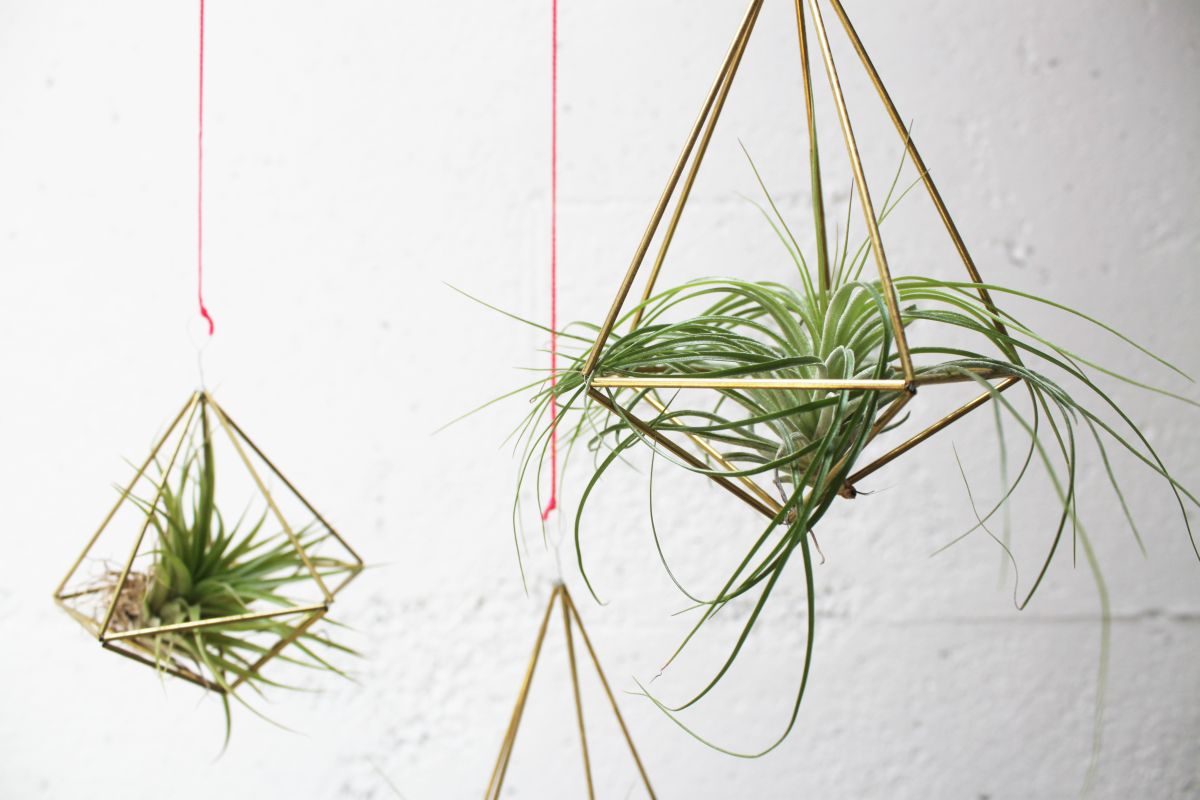
Chic and futuristic DIY air plant holders are it. Create geo-shaped holders with shiny brass rods.
When you own air plants, take advantage of indirect light sources. If you own mother plants, make sure they can absorb nutrients from a separate tree source.
Air Plant Desk Stand

Air plant holders that look airborne create an adventuresome decor. Tie a floral wire to a wooden block for your base. Use a flexible wire and attach it to a boho block to match your modern desk.
Jellyfish Air Plant Holder

Air plant care couldn’t be any easier. New plants will require less water than other plant species. You’ll have a great time caring for the tillandsia genus. When they bloom, you’ll enjoy their beautiful bright colors.
In this example, hang the air plants upside down with jellyfish plant holders. Each holder has a circular base that hangs upside-down while the air plant points downward.
Air Plant Terrariums

A small terrarium is a chic way to display an air plant. It will need room to grow and plenty of air. Think of a plant the way you would a dog. A healthy dog will protect their home much better than an unhealthy one.
How To Hang Air Plants
Tillandsia are popular. Caring for an air plant is simple. And there are many stylish ways you can use them to decorate your home.
Whether you display them in a terrarium, hang them with a fishing line, or in a glass bowl, air plants always look nice.
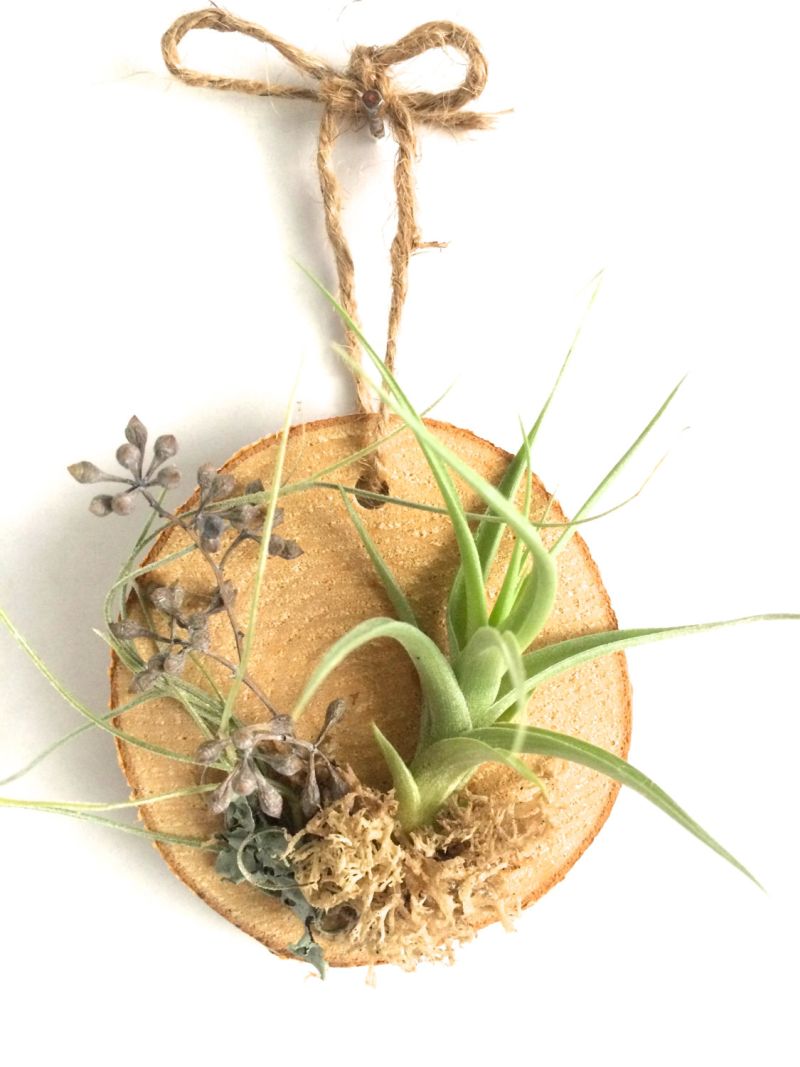
Although there are many different types of air plants and lots of different species, the most common one is Tillandsia. This is the symbol of air plants everywhere, representing more than 600 other species.
Air plants grow in Spanish moss, ball moss, broad needle leaf, Bartram’s air plant, Chinese evergreen, peace lily, snake plant, and weeping fig.

Air plant care is easy for all species. The plants require three things: light, air circulation, and water. First, air plants like filtered natural light. You’ll need to protect them from direct sunlight. During colder months, the plant species enjoy direct sunlight.
Brass Ball Air Plant Holder

If you choose a terrarium, one side should be a screen mesh so air can circulate through it. The best temperature for air plants is 50-90 Fahrenheit.
Air Plant Lifecycle

When you first receive your air plant, soak it in distilled water for 30 minutes. You should water it every five days in dry conditions and every 10 days in humid environments.
For healthy growth, use fertilizer twice a month. Curled or rolled leaves are the sign of a dehydrated plant.
DIY Mini-Wall Hangers

The plants receive nutrients from the atmosphere and grow on other plants or structures for support. Unlike parasite plants, they don’t harm other plants while anchoring themselves to their hosts.
DIY Air Plant Wall Hangers
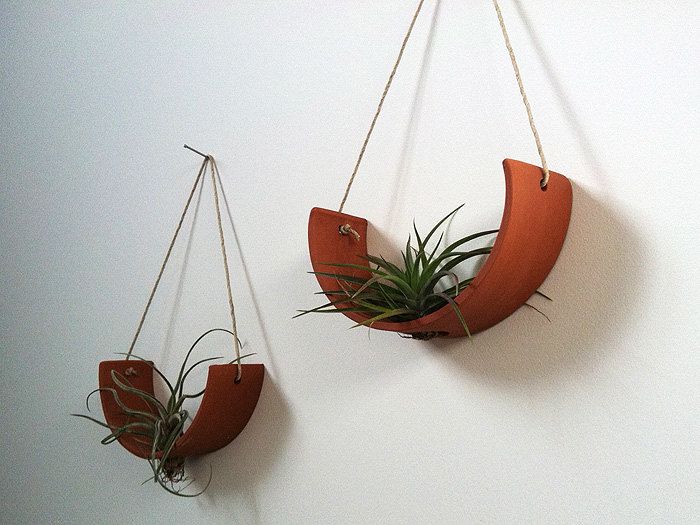
When air plants bloom, they make small pups. You can remove the buds when they’re around 1/3 or ½ the size of the mother plant. The mother plant will make way for her babies but leave a few more months or years.
DIY Air Plant Projects
Here are a few DIY air plant projects that will inspire your next makeover.
Simple DIY Hanger
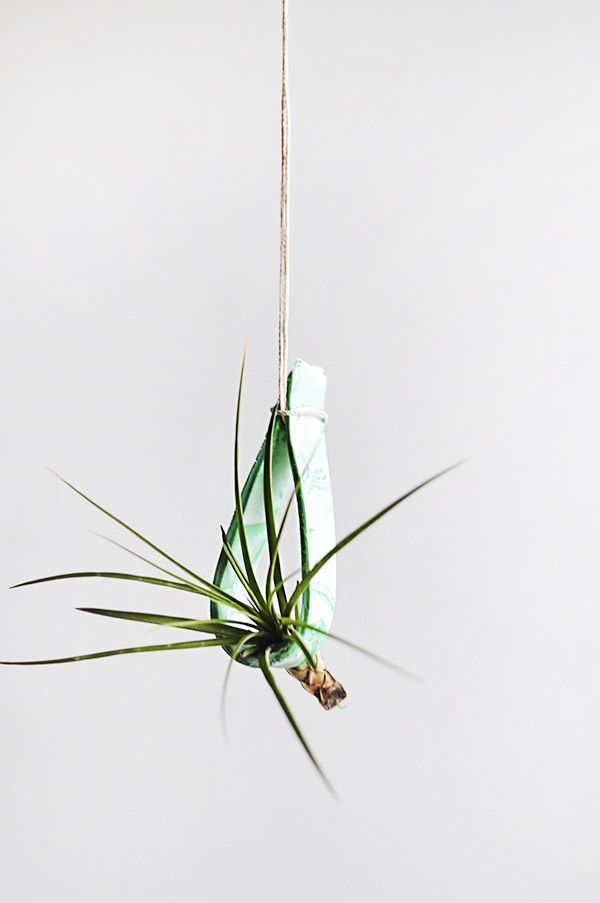
Air plants can be displayed in different ways. A popular option is to hang them. You will need polymer clay, a rolling pin, and something to cut the clay,
Air Plant Copper Hangers
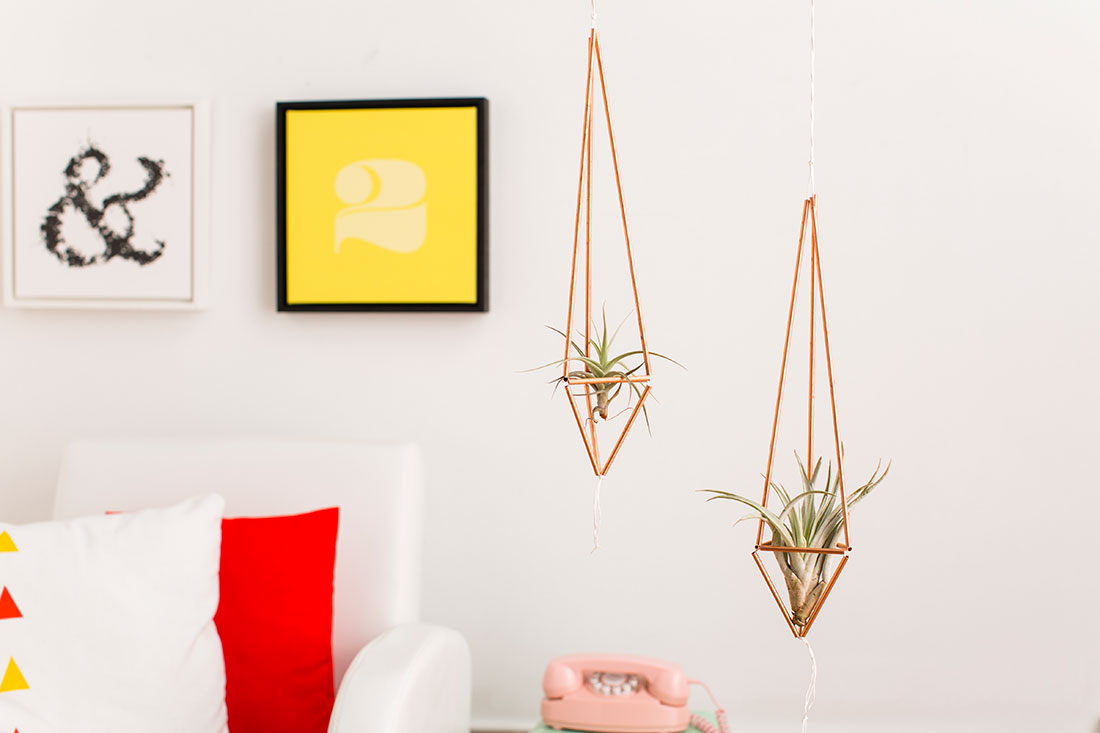
You can easily make these copper hangers yourself using pipes, string, and wire. Measure and cut the thin copper pipes and then cut the string to size. Insert the string through each pipe and connect these to form a triangle shape using wire.
Then attach three longer pieces of pipe for the top section and three smaller ones for the bottom.
Geo-Plant Hangers

These chic geometric air plant holders are made of coffee stirrers and wire. Their design is similar to that of the triangle copper hanger featured above.
After you cut the coffee stirrers to the desired length, cut wire and thread into four small pieces to form a square. Last, attach four larger pieces to the corners to make a pyramid-like shape.
Clay Hanging Planters

Clay hanging planters are fun and you can make them yourself however you want. Roll the clay and use a square cookie cutter to cut out a section. Cut that into two triangles. Use more clay to make a long rectangle.
Cut the triangle in half and then bend the rectangle along its edges. Put the other triangle on top to complete the form.
Macrame Air Plant Hanger

Perhaps you’d also like the look of these macrame air plant hangers. The containers are sections of plastic Easter eggs but you can improvise with this part. To make the hanger, use faux suede cording or something similar.
Hanging Glass Terrarium

The most popular option is this glass terrarium which you can hang with the fishing line. Inside the terrarium, you can put colored sand at the bottom, add pebbles, and put the air plant on top.
Hanging Brass Plant Holder

You can either put the air plant directly in this geometric holder or contain it in a planter. The inspiration comes from a traditional Finnish ornament made of straw or reeds. The holders are hung above dining tables.
Sphere Hanging Basket

The Sphere hanging baskets let you mix and match your air plants for a lush display. They come in four different sizes and they pair with custom-fitted liners.
The baskets are made of steel with a rust patina and they are suitable for both indoor and outdoor use.
DIY Papier-Mache Air Plant Pod

Make papier-mache bowls to display air plants using balloons, flour, newspaper, paint, and string. First, make the balloon as large as you want, depending on the size of the bowl. Mix flour and water and cut strips of newspaper.
Dip them into the mixture and cover the balloon, leaving out a section. Let it dry overnight. Then add another layer of newspaper strips and let it dry. Pop the balloon and then paint the pod and watch your room come to life.
Hanging Wall Planters

You can buy these chic hanging planters for both indoor and outdoor spaces. This is a set of three hanging planters available on Etsy. They measure around 3.5 inches in diameter with a 2.5 inches opening, and they’re handmade.
Copper Couplers Plant Holders
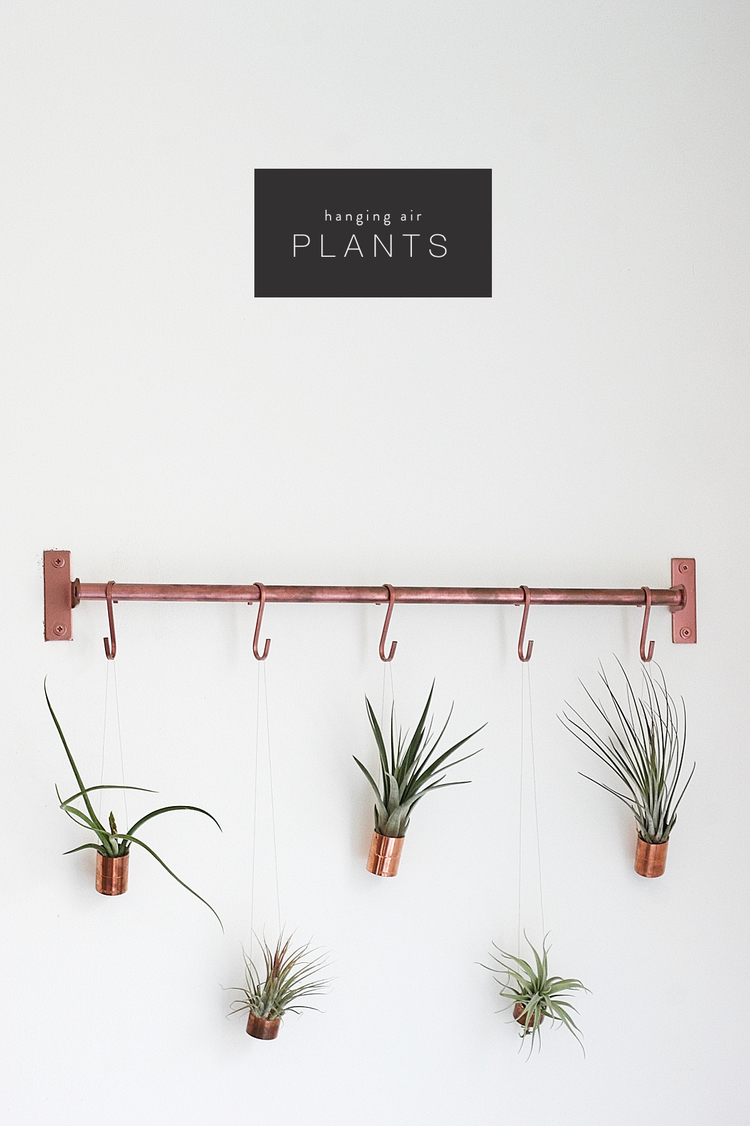
For cute baby air plants, try copper couplers as a display system. You’ll need a rail and hooks for that and these can be spray painted in any color you want. Drill two holes in each copper coupler and thread wire or twine through them to make a hanging loop.
Ceramic Plant Holder

A ceramic air plant holder which can feature a variety of different colors. Because each of these pods is handmade, that means each one has unique characteristics. The sisal rope gives them a lot of character.
Mini-Cone Plant Holders

These mini cones are both cute and stylish, showcasing air plants in an elegant way. Their vibrant glaze color is given by the finishing process. The planters are fired in gas reduction and no two looks the same. They’re small, measuring only 2”.
DIY Copper Planters

Copper fittings are for those who prefer an industrial look. The back panel on which the copper fittings are displayed is made of concrete. Cotton rope lets you hang it wherever you want.
If you want, you can make something yourself and you’ll a mold which can have any form you want.
DIY Glass Jar Planters

A simple and interesting handmade planter for air plants can come in the form of a glass jar. It’s the same idea when displaying candles. Wrap twine or cord around the mouth of the jar and then make a long strap that hangs from a tree.
Hanging Mason Jar Planters

You can hang the Mason jars with rope or twine and attach them to wall-mounted hooks. You can put some small pebbles at the bottom of the jar or you can decorate it with shells and other things.
Air plants don’t need soil so replace it with anything you want or nothing at all.
DIY Felted Wood Bowls
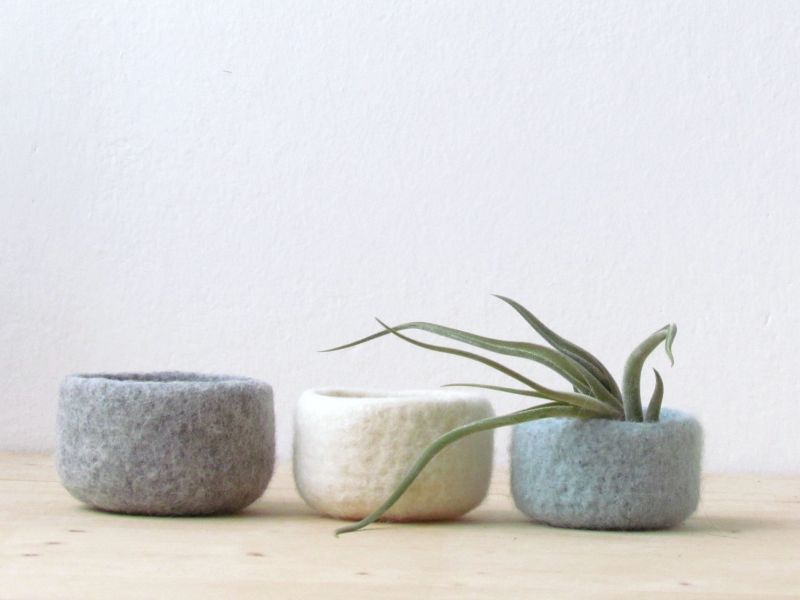
Although not designed for air plants, these felted wool bowls look beautiful. They look cozy and perfect for the colder months. Use them for cacti, aloe plants, or other species. They can be left empty and used for air plants as well.
Up-Cycled K-Cup Planters
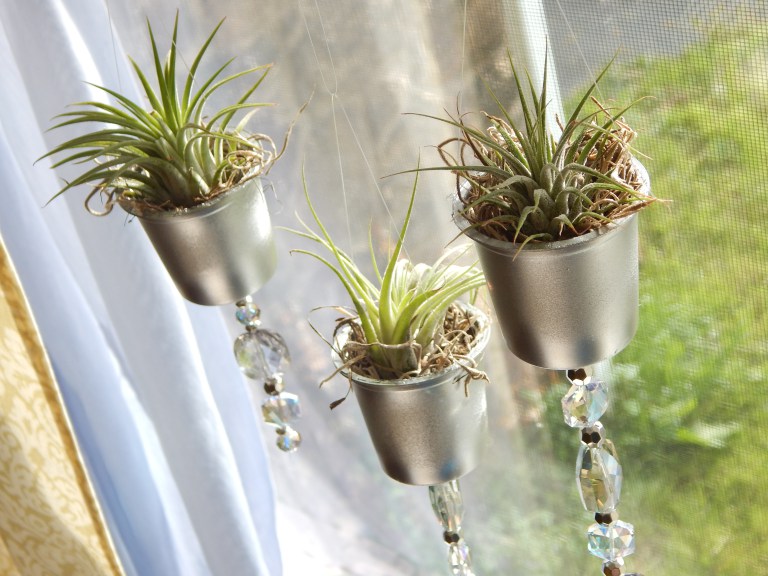
Small buckets can be used as containers for air plants or regular plants. You can hang these with a rope or cord. You can paint or decorate them in many interesting ways. For example, cover them with rope or decorating paper.
Table Air Plant Stands

Because air plants don’t require soil, you can have a lot of fun displaying them in a stand. You can make this with a small block of wood, a piece of wire, and a drill.
Make a hole at the center of the cube. Loop the wire around something cylindrical and then insert the straight end into the hole.
3D Printed Lego Air Plant Holder

Air plants get their nutrients through leaves, not roots so you can replace the soil with pebbles. The container can be anything you want. It can be something as simple as a glass jar or as interesting as a 3D-printed pot.
You can decorate it with cute little Lego characters or some other ornaments.
Porcelain Air Plant Holders
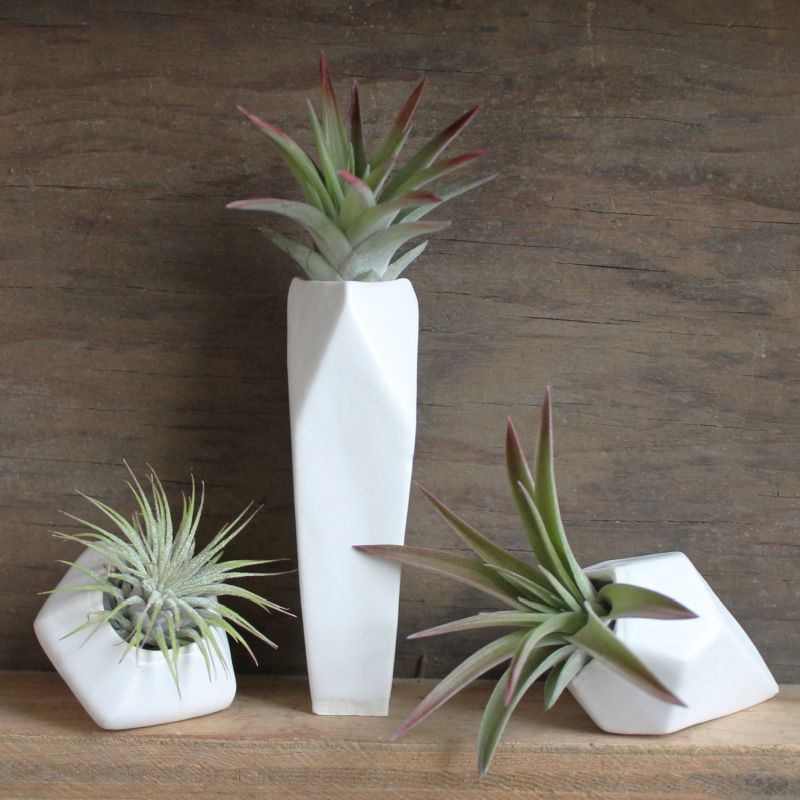
You can even put them in vases and turn them into table centerpieces. This is a stylish collection of three faceted porcelain containers. One looks similar to a vase while the other two are pods designed for air plants.
The holders are handmade which makes each one unique.
DIY Triangle Air Plant Terrarium

If you’re looking for something rustic this triangle-shaped air plant terrarium would be a wonderful decor item. You can display it flat on a table or its side.
This example was designed for indoor use. The grain of the wood is different for each one and so does the color.
DIY Plant Cup Holders

You can get creative with air plants with a diverse collection. Use containers like glasses, teacups, dishes, and pods. The plants can have different forms, colors, or sizes and together make a cool display for a mantel or table.
DIY Bowl Plant Holders

Use air plants for a subtle touch of green on a console table or a desk. You can put a single air plant inside a glass bowl or terrarium. It can have small pebbles at the bottom.
Beads, sand, and other options can also look stylish and for a touch of color, you can also add a small ornament such as a tiny bird.
DIY Rock Plant Holder

Turn a rock into a pot for your air plant. You can keep the plant in place with a little bit of glue. The challenging part is selecting a rock. Once you find what you’re looking for, glue the air plant to it. You can use a hot glue gun, but wait a while for the glue to cool off.
DIY Air Plant Pots

These cute air plant pots are made from large wooden doll heads dipped in dye. It’s possible to find alternatives. For example, use large wooden beads instead and drill holes in each one making sure you don’t go all the way through.
You can then dip them in paint or stain. For a subtle and natural look, try using tea.
DIY Air Plant Centerpiece
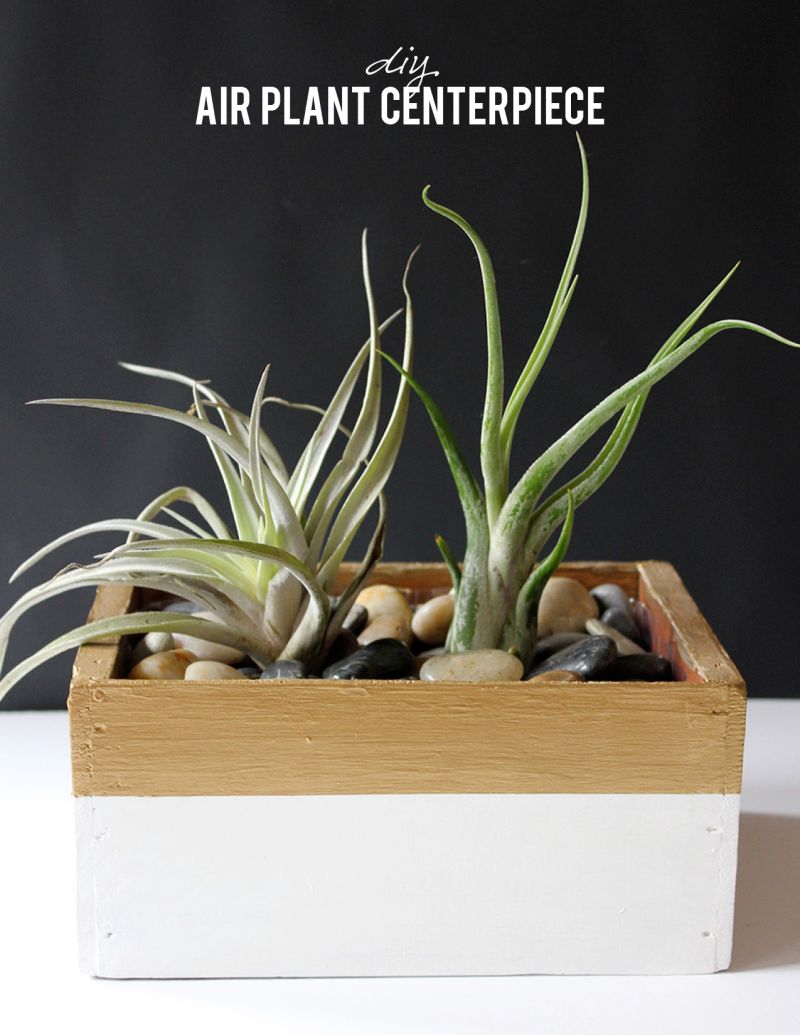
An air plant centerpiece can be a very chic decoration for the dining table. The centerpiece can be made out of a repurposed wooden box. First, sand and paint the box or change its look however else you want.
Then put some river rocks inside and, in the end, insert the air plants to make a beautiful composition.
Tillandsia Garden Art

Use a terracotta star bowl into a cozy home for your air plants. In case you can find a wooden ball with star-shaped holes, you can improvise with a bowl or something else.
The main idea is to have a container with several small openings so you can put an air plant in each one.
DIY Marbled Air Plant Holder
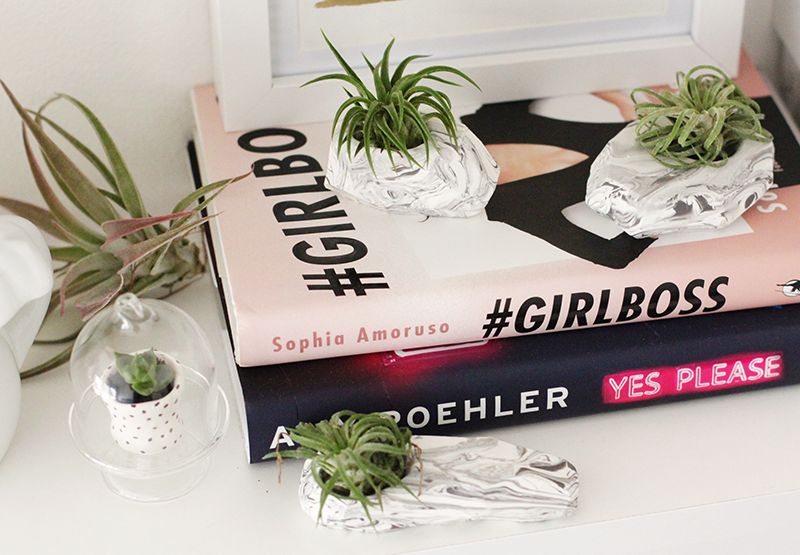
You can also make your clay pots. Mix black and white clay for a marbled effect. Of course, any other two colors would also work just as well.
Combine the two colors and then roll the clay on a flat surface. Trace a circle in it and carve out a hole. Then give the piece any shape you want using an x-acto knife.
Air Plant Cube Stands
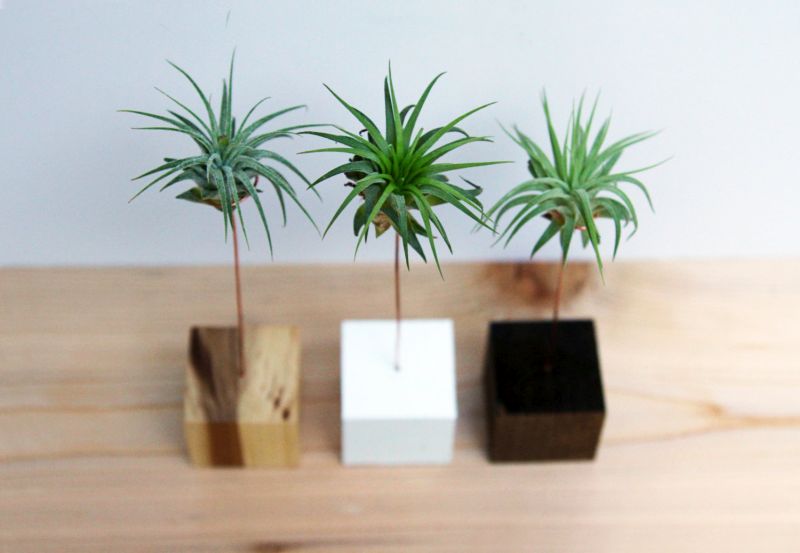
Given how versatile and low maintenance air plants are, desk stands can also be a solution. These stands are 6 inches tall and have a cube-shaped wooden base. The plants are held with a wire that forms a loop at the top.
You can use the stands individually or mix and match them to create a set.
Air Plant Rock Garden

An air plant rock garden would be very easy to make using a small dish and a bunch of river rocks. First, select a dish that you want to use for the project. Clean it and then put some river rocks or pebbles in it.
After that, add some decorative things like shells or ornaments and put the air plant in as well.
Stone Slab Plant Holder

Give your desk a zen look with an air plant display made up of stacked rocks. It’s really easy to make something similar to this particular design.
Take a few rocks, preferably flat and of increasingly small dimensions. Stack them and place a small air plant on top. You can play with them when you need to relax your mind or when you’re bored.
DIY Mini Succulent Plants
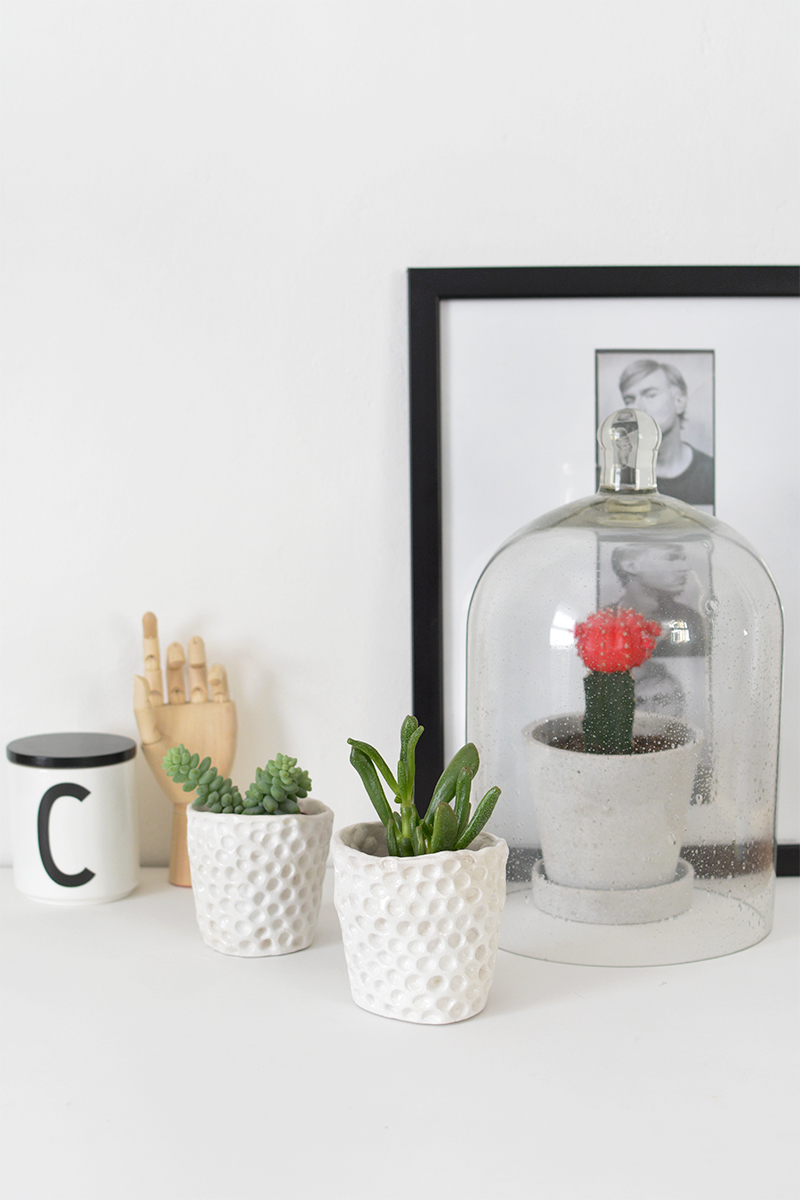
If you want to make clay pots, have fun designing them. To make pots that look like the ones in this example, use air-dry clay, small pots, a rolling pin, a craft knife, and spray varnish.
Roll out the clay and then wrap it around the pot. Trim the excess and smooth the edges with some water, and you’ll be set.
Pastel Plant Pots

Make air plant pods or buy them at a store. Unlike other plants, the air plant species measure 1.5 inches to 2 inches in diameter.
Wall-Mounted Displays
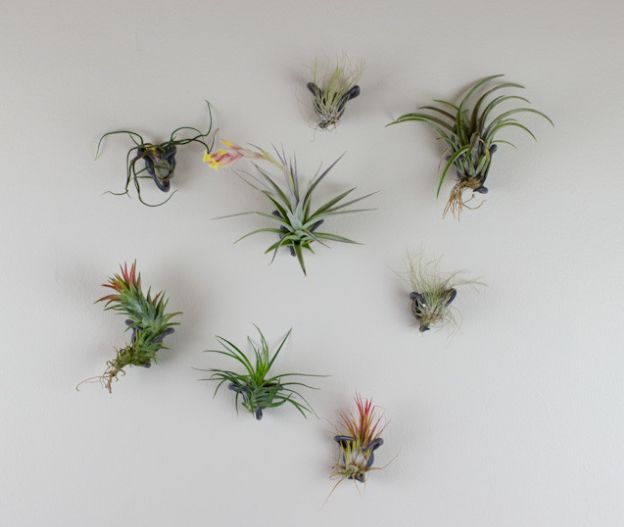
Because of their small size, air plant species are easy to hang on a wall. They don’t require direct sunlight and will thrive off of indirect sunlight.
You don’t have to worry about watering air plants, which makes the ideal for wall spaces. Plus, they don’t require soil, which means your walls won’t get dirty.
Create a gallery wall with two air plants and add more if the setting calls for it. Mark the spots on the wall where you want to place each one and then just them in place.
Triangle Plant Hangers
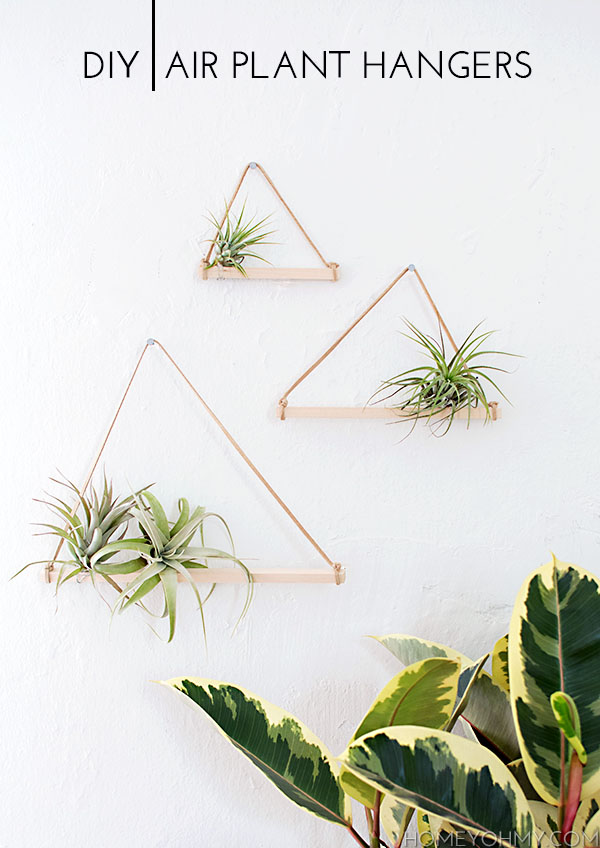
Wall-mounted air plant hangers add style to indoor spaces. The hangers are easy to make. All you need are square wooden dowels, suede lace, scissors, air plants, wire, and wire cutters.
Cut the dowels and wrap suede lace around the edges and make two knots. Hang this on the wall and then put an air plant on it.
Air Plant Frame

Air plants are perfect for building vertical miniature gardens for the walls. A simple idea is to use a frame and mesh wire.
Staple the mesh wire to the back of the frame and place the air plants through the openings.
Valentine’s Day Planters

Combine string art and air plants and you’ll have a wall art collage in no time at all. A Valentine’s Day theme with air plants is a low maintenance endeavor.
You can personalize each project with your choice of colors and the desired dimensions and shapes.
Pocket Plant Holders

A really simple project can be a leather pocket for an air plant. You could also use fabric for this. Each pocket can be made from a scrap piece of leather or fabric in three easy steps.
First, cut the leather into a square or rectangle shape. Second, fold one edge over the opposite side to create a triangle. Third, punch holes through both edges.
Thread a cord through the holes and tie the edges together. For the final step, punch a hole at the top and hang your leather pocket.
Magnet Plant Holders

Magnetic air plant holders make for great refrigerator display items. Use Easter egg containers and split them in two, so one half of an egg is used per flower.
Paint the plastic eggs and attach magnets to each one with glue. Put a tiny air plant in each container stick it on your refrigerator or magnet board.
Board Holders

String art and air plants sometimes go hand in hand. Use the technique to make some unique decorations. This project starts with a few simple things such as a wooden board, some colored string, small nails and a hammer.
Outline the desired design on the wooden board and then hammer nails along the lines. After that, start wrapping string starting from a corner. When you’re done, place an air plant or two in the webbing.
DIY Air Plant Wall Frame

A beautiful frame can also be used to make an air plant decoration. All you need is a string and small nails. Use an old mirror frame if you need something bigger.
When making this plant holder, first, sand, paint, or stain it if you want. Then hammer some small nails to the back of the frame and start making a web out of string to hold your air plant.
Mini Clay Pot Magnets

Put air plants in tiny clay pots and attach magnets to each one so you can stick them to a board. Once you have your tiny containers, glue magnets to each one and put tiny plants in them.
Ceramic Air Plant Hangers

Ceramic planters can also be displayed on the wall. You can mount them with screws or nails. Air-dry clay, paint, a rolling pin, and X-acto knife, and some sandpaper are the main things you’ll need to make these planters.
Roll out some clay, trace the desired shape on a piece of paper and use that as a template. Cut the pieces out of clay and then put them together, smoothing the edges with water. Put something inside to give the pocket the desired form.
Air Plant Hanging Terrarium

Glass terrariums with copper wire attached to a wood panel offer soft green touch. You could look at it another way and see the glass planters as the translucent eyeballs of an android grasshopper. Plants and planters may limit, but if they do, that’s on you.
Take your DIY design skills to the next level and turn your space into an interactive modern art piece. Instead of following Martha Stewart’s lead, imagine what Salvador Dali would do and see if you could pull that off.
The hanging glass planters look great in hallways, above foyers, and mudrooms.
Frequently Asked Questions (FAQ)FAQ
Do Air Plants Die After They Bloom?
Most air plants have distinct growth cycles. The plants stop blooming after they grow. Their energy is passed to the “pups” produced after they bloom.
Can You Give Air Plants Tap Water?
Tap water changes according to its environment. Air plants enjoy soft water. If you’re unsure about the water, use rainwater or bottled water.
How To Revive A Sick Air Plant?
If an air plant has brown spots it’s because it hasn’t received enough water. The good news is that the plant isn’t dead. The first thing you can do is soak the plant in water.
If you use tap water, make sure you dechlorinate it before soaking the sick air plant in it. The best water to use when curing a sick air plant is rainwater.
Another problem is that the air plant needs more air. If you have it in a container with a small top, find something that has a large opening that will provide the plant with more air.
Are Air Plants Poisonous To Cats?
If your sweet kitty cat nibbles on a Tillandsias you won’t have anything to worry about because air plants aren’t toxic.
How To Build An Air Plant Terrarium?
You’ll need an open glass container with good airflow. Air plants need a strong oxygen supply. Next, put sand or aquarium gravel at the bottom of the glass container. Add a few stones, rocks, or scrap wood pieces for decoration, and you’re all set.
Air Plants Conclusion
Air plants are a wonderful addition to bedrooms and living spaces. All you need is one air plant for your bedroom or kitchen to enliven it with positive energy. Dedicate an entire wall to air plants and watch the area spark excitement and energy.
The post Hanging Air Plants Indoors For Healthy And Stylish Spaces appeared first on Homedit.
12 Rounded Kitchen Island Ideas That Bring Soft Elegance to Modern Homes
Rounded kitchen islands bring soft edges, warm flow, and a sculptural look to any layout. From light wood and stone to bold color and classic trim, these designs show how curves can shape a kitchen wi
KitchenRounded kitchen islands bring soft edges, warm flow, and a sculptural look to any layout. From light wood and stone to bold color and classic trim, these designs show how curves can shape a kitchen with balance, comfort, and strong visual impact. This collection highlights different ways to use rounded forms for a space that feels open, smooth, and inviting.

Soft Curves, Modern Calm

A bright modern kitchen with a rounded wood island and white marble top. Soft curves give the space a warm, sculptural look, balanced with light cabinets, brass accents, and simple styling.
White Minimalist Kitchen Island

A soft, neutral kitchen with a rounded island in pale wood slats and a smooth white top. Light rattan stools, warm floors, and simple pendant lights create a calm, bright look.
Bold Round Island With Warm Color and Clean Modern Lines

A standout round island in matte orange anchors this kitchen with bold color and smooth curves. Wood cabinets, terrazzo counters, and fresh greenery keep the space balanced and modern.
Curved Island With Soft Green Tones and Vintage Accents

A spacious kitchen with a curved island in muted green, paired with quartzite counters and smoked-glass fronts. Vintage chairs, warm wood floors, and a built-in seating nook add character and depth. This layout blends old and new, turning the Berliner Zimmer into a true center of the home.
Soft Curves and Layered Light in a Modern Gray Kitchen

A rounded island anchors this gray kitchen, paired with a striking stone backsplash and warm layered lighting. Curved lines, glass accents, and sculptural pendants shape a clean, refined space where light builds depth and texture.
Rounded Brass Island in a Classic-Meets-Modern Kitchen

A rounded brass island brings smooth edges and warm shine to a classic room with ornate trim, marble floors, and sculptural green pendants. Art, texture, and soft curves create a refined, playful mix of old and new.
Rounded Brass Island in a Classic-Meets-Modern Kitchen

A rounded brass island brings smooth edges and warm shine to a classic room with ornate trim, marble floors, and sculptural green pendants. Art, texture, and soft curves create a refined, playful mix of old and new.
Rounded Wood Island and Soft Neutral Cabinets

A rounded wood island pairs with pale cabinets, brass fixtures, and marble surfaces. Warm light and curved forms add softness to this classic layout, giving the space a refined, calm feel.
Warm Wood Island With Soft Rounded Corners

A warm wood island with rounded corners pairs with a bold stone backsplash and smooth plaster hood. Cane stools and light floors add texture and balance to this calm, natural kitchen.
Minimal Kitchen With a Rounded Oak Island and Soft Stone Top

A rounded oak island pairs with light stone surfaces and clean white cabinets. Warm herringbone floors and simple forms create a calm, natural look.
Rounded Wood Island With Slatted Panels and Dark Stone Top

A rounded slatted wood island pairs with a dark stone counter and warm oak cabinets. Large windows, clean lines, and brass fixtures give the kitchen a light, natural feel.
Rounded Stone Island With Sculptural Stools in a Rich, Textured Kitchen

A large rounded island anchors this warm, dramatic kitchen. Soft, sculptural stools add shape and texture, while deep cabinets, marble surfaces, and exposed beams create a layered, inviting layout.
The post 12 Rounded Kitchen Island Ideas That Bring Soft Elegance to Modern Homes appeared first on Homedit.
Standard Desk Dimensions
Here are the standard dimensions for common desk types, including sitting desks, standing desks, writing desks, and executive desks. Use this quick reference to find the right fit for your space. How
Office DesignHere are the standard dimensions for common desk types, including sitting desks, standing desks, writing desks, and executive desks. Use this quick reference to find the right fit for your space.

| Desk Type | Typical Dimensions (L x W x H) | Key Features / Use Cases |
|---|---|---|
| Sitting Desk | 48″-72″ x 24″-30″ x 28″-30″ | General use, writing, computer work |
| Standing Desk | 48″-72″ x 24″-30″ x 38″-50″ | Adjustable height for standing/sitting work |
| Built-In Desk | Custom | Integrated into room design, customizable |
| Writing Desk | 30″-60″ x 18″-24″ x 28″-30″ | Minimalist, light writing and reading tasks |
| Computer/Gaming Desk | 48″-72″ x 24″-30″ x 28″-30″ | Designed for computers, dual monitors, gaming |
| Credenza Desk | 60″-72″ x 18″-24″ x 28″-30″ | Storage-focused, often a secondary workspace |
| Executive Desk | 60″-72″ x 30″-36″ x 28″-30″ | Large, professional, for executive office use |
| Secretary Desk | 30″-42″ x 18″-24″ x 40″-48″ | Compact, fold-down work surface with storage |
How to Choose the Right Desk Height
A standard desk height for seated work is 28″-30″.
- Your elbows should form a 90-degree angle when typing or writing.
- There should be ample clearance for your knees (minimum 24″ depth at knee level).
Standing desks should allow you to type comfortably with your arms at a 90-degree angle and monitors at eye level. Adjustable models (range: 28″-48″) are ideal for switching between sitting and standing.
Tips for Planning Desk Space
- Single workstations: Allow at least 31.5″ depth and 63″ width for a freestanding desk.
- Shared workspaces: Plan 16-32 sq ft per person. Use dividers or L-shaped desks to optimize space.
- Maintain 2-2.5 ft clearance behind the desk for easy movement.
The post Standard Desk Dimensions appeared first on Homedit.
21 Black Kitchen Ideas That Make Dark Spaces Look Modern and Striking
Black kitchens are no longer reserved for bold designers, they’ve become a go-to choice for creating depth, contrast, and a refined edge in any home. From matte cabinetry and sculptural stone island
KitchenBlack kitchens are no longer reserved for bold designers, they’ve become a go-to choice for creating depth, contrast, and a refined edge in any home. From matte cabinetry and sculptural stone islands to brass hardware and soft wood accents, these spaces show how dark palettes can feel crisp, balanced, and undeniably modern.

Whether the room is compact or open-plan, each of these 21 black kitchen ideas proves that thoughtful materials, clean lines, and layered lighting can turn a simple layout into a standout interior.
Expect a mix of dramatic minimalism, warm contemporary blends, and timeless black-and-white compositions that redefine what a dark kitchen can be.
Brass Window Kitchen

Black cabinetry, brass hardware, and a deep farmhouse sink define this bright, structured kitchen, where large grid windows amplify contrast and bring clarity to every finish. The marble counters keep the long layout balanced and uninterrupted.
I’d replace the upper glass panels with reeded fronts to introduce dimension without disturbing the classic lines.
Dark Stone Island

A monolithic island wrapped in veined black stone anchors the room, paired with matte cabinetry and wood wall cladding for a low-contrast modern composition. Soft, recessed lighting highlights the stone’s movement and keeps the space grounded.
I’d add a slim metal toe-kick to give the island a slight lift and a more architectural presence.
Fluted Black Island

Vertical fluting on the island brings rhythm to the layout, contrasted by a white surface and a light marble backsplash. The dark, minimal cabinetry keeps the focus on texture and proportion.
I’d introduce a soft bronze faucet to warm the palette and connect the fluting with the natural wood floor.
Marble and Walnut Mix

Black shaker cabinets and brass accents frame a striking marble backsplash, while the walnut island adds depth and natural movement. The lighting above the island strengthens the vertical composition and blends metal tones with wood grain.
I’d use a thicker countertop edge on the island to better match the bold marble veining behind the cooktop.
Classic Black Kitchen

This design blends black cabinetry with open shelving and pale countertops, using curated dishware and parquet flooring to keep the space visually balanced. The ceiling height allows the dark palette to feel structured rather than heavy.
I’d extend the shelving lighting to the full height for a stronger display effect and more even illumination.
Compact Black Corner

Deep black cabinetry, brass cup pulls, and a farmhouse sink create a compact corner kitchen with strong detailing and efficient layout. The marble backsplash wraps the space seamlessly without competing with the metal finishes.
I’d switch the pendant to a tighter cone shade to sharpen the vertical axis above the counter.
Ultra-Matte Minimalist

A full matte-black scheme gives this kitchen a sculpted, monolithic feel, with flat fronts, concealed handles, and a clean island that mirrors the wall units. The uninterrupted planes keep the space calm and precise.
I’d add under-cabinet lighting to introduce depth without altering the minimalist silhouette.
Black and Walnut Run

The long black base cabinets pair with walnut uppers and warm lighting, creating a refined horizontal flow. The backsplash and counter remain understated, allowing the materials to highlight each other.
I’d shift to a stone backsplash to give the walnut more contrast and create a stronger focal point.
Marble Wrapped Island

A marble-wrapped island and matching slab backsplash form a sculptural centerpiece, contrasted with matte black cabinetry. The continuous veining brings drama without crowding the layout.
I’d align the island veining with the backsplash pattern to strengthen the overall visual continuity.
Black Stone Monolith

This kitchen centers on a dramatic waterfall island in black stone, paired with matte cabinetry and sculptural black ventilation that mimics the island’s mass. The horizontal window cuts the darkness with a precise band of daylight.
I’d add a thin brushed-metal edge on the island to create separation between the stone and the floor.
Wood Cabin Contrast

Matte black cabinetry anchors the double-height wood interior, while the island introduces vertical slats that echo the surrounding timber walls. Brass lighting bridges both materials and strengthens the cabin’s linear geometry.
I’d shift the island top to a stone surface for a crisper break against the warm wood volume.
Black With Blonde Wood

A full matte-black kitchen gains lift through light wood stools and a marble-pattern backsplash. The single pendant reinforces the vertical rhythm and keeps attention on the island’s clean form.
I’d extend the backsplash slab to the ceiling to sharpen the focal point above the faucet.
Black Galley Mix

Shaker cabinetry, brass framing, and a wood accent wall shape a galley full of layers and contrast. Open shelves lighten the upper portion, while the rug and flooring anchor the room with texture.
I’d replace one brass shelf with a closed cabinet to balance the left and right walls.
Dark Minimal Volume

Full-height matte cabinetry and a streamlined island shape a clean, quiet layout, lifted by the large window that frames the landscape. Slim pendants follow the height of the room and keep the design uninterrupted.
I’d integrate a soft wood base trim to break the transition between cabinet and floor.
Scandinavian Black Blend

Black cabinets pair with butcher-block counters and a deep apron sink, mixing Nordic function with contemporary lines. Open shelving introduces casual storage that softens the dark palette.
I’d switch the hood to a flatter profile to avoid pulling the eye too high in the compact layout.
Black and Birch Balance

Dark cabinetry meets pale marble counters and light wood stools, creating a kitchen grounded in contrast but softened by natural tones. The double pendants anchor the island and connect the finishes across the room.
I’d use a darker stool seat to tie in the island base while keeping the wood frame exposed.
Textured Grey Stone

Grey cabinets, fluted uppers, and a cool stone backdrop create a tonal kitchen with subtle shifts in grain and texture. The layout stays restrained, letting the materials do the visual work.
I’d add a matte steel rail above the backsplash for functional hanging storage without disrupting the palette.
Rustic Black U-Shape

Black base cabinets sit under thick walnut counters, extended onto the backsplash for a unified U-shaped composition. Open shelves and woven shades introduce organic elements that tie the room to the landscape outside.
I’d lower the pendant slightly to strengthen the seating and prep zone beneath it.
Black Compact Layout

Matte black cabinetry shapes a clean L-shaped layout, contrasted by a white subway backsplash and minimal pendant lighting. The island extends the counter zone and brings in height through slim wire stools.
I’d introduce a stone backsplash instead of tile to give the black surfaces a stronger anchor.
Brass-Trimmed Modern Kitchen

Full-height black cabinets frame the space, while a white island with brass pulls and a linear brass pendant creates symmetry and balanced contrast. The inset window acts as a centered visual break behind the sink.
I’d add a matching brass toe-kick to the island to tie the lower portion into the rest of the metal accents.
Marble-Slab Focus

A dramatic dark marble backsplash forms the focal point, drawing the eye with its veining and mirrored pattern. Textured black wood uppers and a streamlined island keep the composition sleek and uninterrupted.
I’d extend the backsplash slab to the side walls for a stronger wraparound effect.
The post 21 Black Kitchen Ideas That Make Dark Spaces Look Modern and Striking appeared first on Homedit.
An Office Like a Gallery: Art Takes Center Stage in Rock Capital’s New Headquarters
In Warsaw’s Metropolitan building, Rock Capital’s 460 m² headquarters combines business elegance with art. Designed by BIT CREATIVE led by Barnaba Grzelecki, the space uses a warm, neutral palett
Office DesignIn Warsaw’s Metropolitan building, Rock Capital’s 460 m² headquarters combines business elegance with art. Designed by BIT CREATIVE led by Barnaba Grzelecki, the space uses a warm, neutral palette as a backdrop for custom works by Łukasz Stokowski. Meeting rooms are named after artists like Banksy and Dalí, reflecting the company’s connection to art.


The Metropolitan’s arches inspired curved built-ins and glazing. Instead of a traditional reception, there’s an open social area with a mirrored-ceiling feature, casual seating, and access to the kitchen. Highlights include the polished steel RONDO sculpture by Oskar Zięta, sculptural wood details, and a custom sintered stone conference table.


The layout balances open work areas, private offices, and shared spaces. Integrated lighting, wood slat ceilings, and subtle branding reflect Rock Capital’s focus on quality, art, and design.


photos: Katarzyna Seliga-Wróblewska, Marcin Wróblewski / Fotomohito
The post An Office Like a Gallery: Art Takes Center Stage in Rock Capital’s New Headquarters appeared first on Homedit.
25 Good Housewarming Gifts
When a friend or family member moves into a new house, it’s customary to bring a small gift to celebrate the achievement. You can bring the gift to a housewarming party or when you visit their new h
Best OfWhen a friend or family member moves into a new house, it’s customary to bring a small gift to celebrate the achievement. You can bring the gift to a housewarming party or when you visit their new home for the first time.
The average price range for a housewarming gift is between $20 and $50, although you can spend more on those you have a close relationship with. To find the perfect gift, consider the recipient’s interests, needs, and lifestyle.
1. A Money Tree

View on Amazon View on Homedepot
Houseplants are a good housewarming gift idea, and The Money Tree is a top choice. It’s an easy-to-care-for plant with a unique design featuring a twisted trunk and lush leaves. The Money Tree is a common plant in Feng Shui to bring luck and prosperity.
2. A Ring Doorbell

Gift safety with a video camera doorbell. Ring Doorbells, or similar models, are easy to install, allowing users to see and speak to people from their connected phone app. The app also provides notifications anytime the sensor engages or someone rings the doorbell.
3. Dutch Oven

View on Amazon View on WayFair
An enameled cast iron Dutch oven is a good housewarming gift for those who enjoy cooking. These pots come in several colors and price ranges. They’re a high-quality gift that will last for years to come.
4. A Housewarming Candle

Candles are a welcome gift, and this one is unique to those who’ve just moved into a new home. The “Good Vibes for Your New Place” candle has a stress-relieving lavender scent and 45-50 hours of burn time.
5. Rachel Ray Cookie Sheets

View on Amazon View on WayFair
A set of high-quality cookie sheets like these from Rachel Ray will last for years. These pans are ideal for those who love to bake or young adults with limited kitchen supplies. The nonstick cookie sheets come in a set of three and in five different grip colors.
6. Acacia Serving Tray

If your giftee loves hosting parties, consider a serving tray like this one made of Acacia. It’s solid wood and features handles for easy transport. It also doubles as an ottoman or bedside tray.
7. A Set of Hand Soap

Gift this Raw Sugar hand soap set to those who enjoy “green” products and like fruity scents. The four-pack includes fragrances like lemon sugar, watermelon fresh mint, coconut mango, and pineapple berry coconut.
8. A 2.6 qt Air Fryer

View on Amazon View on WayFair
Anyone who doesn’t have an air fryer is missing out on easy and delicious food, which is why this 2.6 qt Air Fryer is the perfect gift. It’s under $50, features a digital display, and comes in fun colors like aqua, red, white, gray, and black.
9. Acrylic Fridge Calendar

Give the gift of organization with this acrylic fridge calendar. It’s magnetic, so it can stick anywhere on the fridge, and it comes with a monthly and weekly planner. It also includes six dry-erase markers, an eraser, and a storage container for the markers.
10. Pretty Casserole Dishes
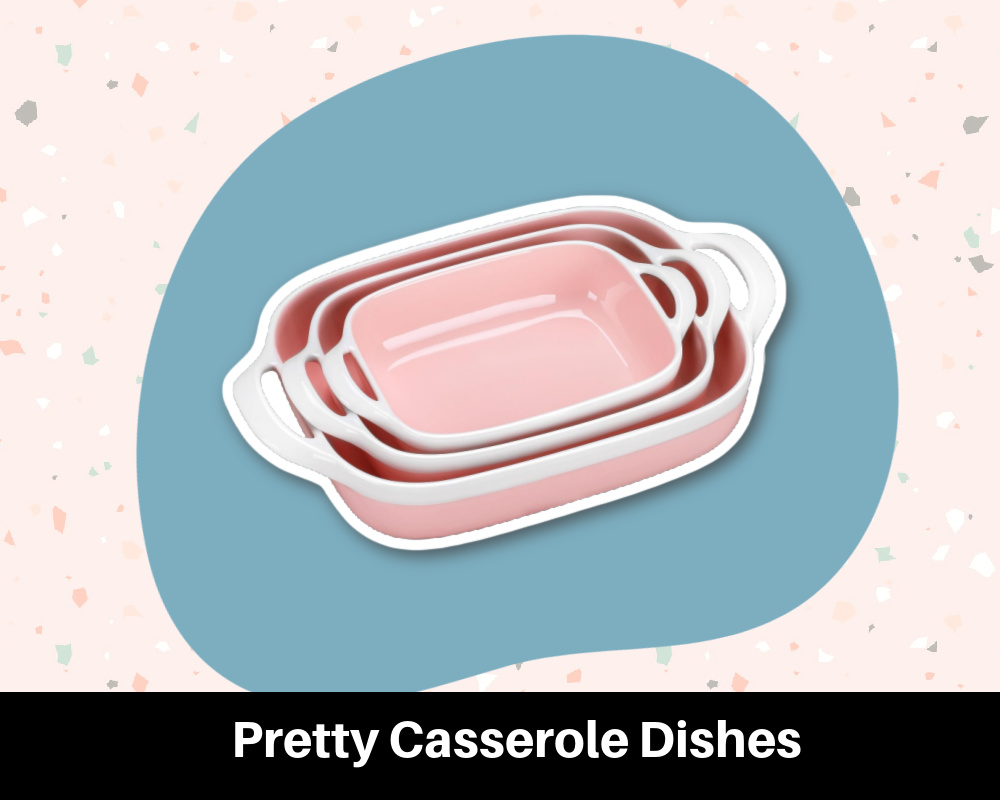
If you’re going to gift cooking items, choose high-quality or fit them into the aesthetic of the giftee. These pretty casserole dishes are available in pink, dark blue, and light blue. They come in a set of three sizes, perfect for making casseroles, lasagnas, and cakes.
11. Modern Boho Coffee Mugs

View on Amazon View on Official Site
These coffee mugs feature a thick ceramic that is microwaveable. The large size is perfect for cappuccino or latte lovers, and the neutral but modern design fits most home styles. The four-pack includes assorted neutral colors.
12. Himalayan Salt Lamp

Some believe Himalayan Salt Lamps purify the air, while others just like how they look. If your giftee is into natural remedies or green products, consider this Himalayan Salt Lamp Globe. It has a unique three-layer design and a 5” diameter.
13. Silicone Pot Holder Set

View on Amazon View on Walmart
These silicone pot holders feature grippy silicone on one side and cotton on the other. They are heat-resistant, machine washable, and neutral enough to fit with all decor. Combine these with a baking dish, and you’ll have the perfect housewarming gift idea.
14. Cotton Throw Blanket

Give the gift of comfort with this cotton weave throw blanket. It comes in fifteen colors and is also available in sizes for queen and king beds. Even though the prewashed cotton looks expensive, this throw blanket is less than $30.
15. Bluetooth Speaker

View on Amazon View on Official Site
Bluetooth speakers are great for playing music or podcasts while cleaning or baking. The Doss Soundbox Pro has stereo sound quality, built-in LED lights, and a waterproof design.
16. A Cake Stand

View on Amazon View on Walmart
Cake stands have risen in popularity thanks to their multiple uses. Consider a high-quality cake stand with glass construction and a dome if there’s a baker in your life.
17. Mason Jar Bird Feeder

Sometimes, bird feeders don’t make it during a move. You can gift your bird-watcher and nature-loving friends this Mason Jar Bird Feeder. It features an antique-style glass top and metal bottom for long-lasting construction.
18. A Crock Pot

View on Amazon View on WayFair
Help busy professionals get a meal on the table with the gift of a Crock Pot. You can find this one for less than $50. It features a low, high, and warm setting and has a 4.7 out of 5-star rating on Amazon from over 26,000 buyers.
19. Linen Spray and Pillow Mist

A linen spray keeps bedrooms smelling good and promotes relaxation. The Baloo Pillow Mist blends lavender, chamomile, and lemon. The formula utilizes only natural ingredients and is clean and cruelty-free.
20. Cocktail Shaker Set

View on Amazon View on Walmart
Help the new homeowners create professional cocktails with this 10-piece set. It features a drink shaker, measuring jigger, cocktail mixing spoon, two liquor pours, a corkscrew, and a bamboo stand. The set is dishwasher-safe stainless steel.
21. Ceramic Oil Diffuser

Essential oil diffusers fill the air with scents and moisture. They’re a nice alternative to candles for those who prefer natural fragrances. Consider this ceramic oil diffuser with a small set of oils as the perfect housewarming gift idea.
22. Bamboo Cutting Board with Color-Coded Mats

View on Amazon View on Walmart
Cut down on germs with this cutting board set featuring a sturdy bamboo base and six interchangeable plastic cutting board mats. The bamboo cutting board features mat storage, and users can toss the plastic mats in the dishwasher after use.
23. Blueland Clean Home Kit

The Blueland Clean Home Kit comes with three reusable bottles and three tablets to make a multi-surface cleaner, bathroom cleaner, and hand soap. The natural cleaners are rated “EPA Safer Choice,” making them a good housewarming gift for families with children.
24. Primal Palate Spice Gift Set

If you know the type of food your giftee likes, consider a premium spice set like this one from Primal Palate. It features steak seasoning, seafood seasoning, and taco seasoning. Combine it with a set of wood utensils for a complete housewarming gift.
25. Tabletop Firepit

If the new house comes with a back patio or deck, give this tabletop firepit. It features a black ceramic base and a smokeless design. It’s ideal for mood lighting or roasting marshmallows in the backyard.
The post 25 Good Housewarming Gifts appeared first on Homedit.